
Self storage in Reading makes moving and decluttering easier by giving you a secure, flexible off-site space for your belongings. This extra space cuts down on the mess at home during a move or clear-out. With a storage unit, you can move at your own pace, work through clutter step by step, and keep your home usable and calmer while you handle the details of moving or reorganising.
Whether you’re moving to a bigger family home, downsizing after retirement, or simply trying to reclaim a spare room that’s become a dumping ground, the right storage solution can help a lot. To find good local choices, you can use this guide to the TOP self storage in Reading, which lists facilities known for being safe and convenient. Having an extra space off-site makes it easier to deal with the emotional and practical side of sorting your things, without the pressure of tight deadlines or crowded hallways.
How Self Storage in Reading Supports Moving and Decluttering
What Makes Self Storage Useful for Major Life Transitions?
Big life changes-like moving to a new city, growing your family, or going through a divorce-often mean your home needs to be used in a different way very suddenly. During these times, self storage can act as a temporary home for your belongings. It lets you “pause” your items so you can focus on the life change itself instead of worrying where to put a sofa or a stack of boxes.
If your family is growing, storage is a handy way to clear out a home office or guest room to create a nursery, without having to get rid of treasured furniture or family pieces. It bridges the gap between your old setup and your new one, keeping your items safe, dry, and protected from pests while you rearrange your home. This flexibility helps protect your mental well-being at a time that is often full of stress and worry.
Why Is Reading a Convenient Location for Self Storage?
Reading is a key transport centre, which makes it a very convenient place for self storage if you live in or are moving to the Thames Valley. With strong transport links and close connections to both residential areas and business districts, getting to a storage unit in Reading is usually quick and simple. Many local sites are placed so you can drop off boxes or pick up seasonal items without a long or stressful drive.
The range of facilities in Reading also means you can access modern features like climate-controlled units and 24/7 CCTV. Whether you’re a University of Reading student needing summer storage or a professional moving for a job, the local setup supports a smooth move. Having a nearby facility makes “micro-moves” possible-moving smaller loads over several days instead of cramming everything into one very tiring day.
Top Benefits of Using Self Storage During a Move
Prevents Stress and Overwhelm When Packing
A key benefit of using self storage during a move is less stress. Instead of living among piles of boxes for weeks, you can move packed items into storage as soon as they’re ready. This keeps your home more orderly and easier to live in until moving day, and helps you avoid that boxed-in feeling.
By keeping only essentials at home and moving non-essentials-like seasonal decor, spare bedding, and off-season clothes-into storage early, you create a more organised space. This clear structure helps you keep steady progress, ticking off jobs one by one without feeling buried under the amount of stuff still sitting in your living room.
Keeps Belongings Safe Between Moving Dates
It’s common to have a gap between moving out of one place and into the next, especially when dealing with property chains or waiting on a new tenancy start date. Self storage gives you a safe way to cover this gap. Instead of forcing everything to happen on a single day, you can store your items safely until your new home is ready.
Good storage facilities offer strong security, such as gated entry, keycode access, and constant CCTV. This protection is especially important for items like electronics, wooden furniture, and artwork. These items stay protected from weather and from the risk of damage that can happen during a rushed, last-minute move.
Allows for Flexible Moving Schedules
Moving does not have to be done all at once. With a storage unit, you can spread the work out in a way that fits your life. Many facilities offer rolling monthly contracts, so you only pay for the time you use. This approach suits anyone who wants to unpack slowly and carefully, bringing items into the new home only when they know where they should go.
This step-by-step move lets you set up the most important rooms-like bedrooms and the kitchen-first. You can then collect things from storage when you’re ready, helping your new home stay orderly from the start instead of being filled with boxes you don’t yet have time or energy to sort.
Simplifies Home Staging and Selling
If you’re selling your current home, clearing clutter is the first step to making it attractive to buyers. A tidy, organised home looks far better than one crammed with personal belongings and spare furniture. By moving extra items into storage, you can create a clean, airy feel that helps viewers imagine themselves living there.
Home staging often means removing bulky furniture so rooms appear larger. Self storage gives you a handy place to keep these items out of sight while keeping them safe. This approach can help your home sell faster and may lead to better offers, because it shows off the property’s best features without clutter getting in the way.
How Self Storage Streamlines Decluttering Efforts
Removes Non-Essential Items from the Home Quickly
When you decide to declutter, the amount of stuff can feel overwhelming. Self storage lets you quickly take non-essential items out of your home. Once that visual and physical “noise” is gone, your space becomes easier to use, and you have the mental space to decide what you truly want to keep.
This is especially helpful for items you don’t want to give up yet but don’t need every day, like Christmas decorations, sports gear, or bulky winter coats. Moving these out of your cupboards and wardrobes makes your home simpler to run and easier to keep clean and tidy.
Makes Sorting, Donating, and Selling Easier
Sorting through years of belongings can be slow and emotional. A storage unit can act as a neutral sorting area away from home. You can move items there and split them into groups: keep, donate, sell, or throw away. This stops your living room from turning into a long-term sorting zone.
If you’re selling items on sites like Facebook Marketplace or eBay, a storage unit gives you a secure place to keep them until they’re sold. It’s also useful for building up a batch of donations until you’re ready to take a full load to a charity shop, making the whole process of cutting back your belongings more organised and less chaotic.
Decluttering Before a Move: Key Steps for Success
Decide What to Keep, Donate, Sell, or Discard
The key to an easier move is not taking things you no longer need. Before you even buy packing supplies, go through your belongings. Use a simple “one-year rule”: if you haven’t worn, used, or even noticed an item in the past year, it may be time to let it go. Be realistic about what will fit and work in your new place, especially if you’re moving to a smaller home.
Sort everything into clear groups. Items in good condition can be sold to help with moving costs or donated to local charities such as Goodwill or The Salvation Army. Broken or unusable items should be recycled or put in the bin properly. This first round of clearing out means fewer boxes to pack, carry, and unpack, saving time, effort, and money.
Organize by Room or Category
To avoid feeling swamped, work through your home in stages. Start with areas that tend to collect clutter, such as the garage, attic, or basement. These spaces often hold things you haven’t used in years. Then move through the house in an orderly way-cupboard by cupboard and drawer by drawer-so nothing gets missed.
Another helpful method is grouping by type, such as keeping all kitchen items together and all linens together. This makes packing and later unpacking much simpler. If you have a large home, break it into smaller “zones” and finish one at a time. This makes progress visible and motivating.
Pack Items for Storage and Essentials for the Move
As you pack, split your items into two clear paths: one for things going straight to the new home, and one for things that will go into storage. Pack storage items in strong, similar-sized boxes or plastic tubs to make stacking safer and easier. Use bubble wrap and packing paper for anything delicate, and make sure everything is clean and dry before placing it in the unit.
At the same time, pack an “essentials box” or “first-night kit” for moving day. This should include toiletries, phone chargers, key documents, a change of clothes, and basic kitchen items. Keeping these to one side means you can live comfortably in your new home on the first night without digging through many boxes.
Practical Tips for Packing and Organizing Self Storage Units
Label and Document Contents for Easy Access
Clear labels save a lot of time later. Mark each box on several sides with what’s inside and which room it belongs to. For even better control, keep a master list or digital spreadsheet. You can number each box and match those numbers to the list, so you know exactly where items like Christmas lights or a spare slow cooker are stored.
Color-coding can help too. Use different coloured pens or stickers for each room-such as blue for the kitchen, green for the living room, yellow for bedrooms. This simple visual trick makes finding what you need in a crowded unit much faster.
Protect Fragile, Seasonal, or Valued Items
Items in storage need a bit of extra care to stay in good condition. Wrap glass, electronics, and delicate decor in soft cloths or bubble wrap. For longer storage, plastic tubs often work better than cardboard because they protect more effectively from moisture and dust. Use furniture blankets or covers to stop scratches on larger items.
If you’re storing things that react badly to heat or cold-like vinyl records, antiques, or delicate fabrics-consider using a climate-controlled unit. This helps protect your important belongings from damage caused by dampness or big temperature changes, giving you peace of mind while they’re stored away.
Use Vertical Space and Plan the Layout
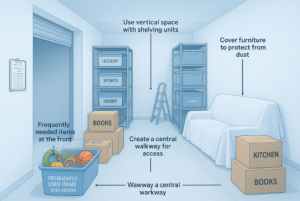
To get the best value from your storage space, think upwards as well as across the floor. Stack boxes with the heaviest and strongest on the bottom and lighter ones on top. If you can, add shelving units to lift items off the floor and make better use of the height of the unit.
Plan where things go. Keep items you may need sooner-like seasonal clothes or certain documents-near the front. Put things you’re unlikely to need at the back. Leave a narrow walkway down the centre so you can reach the back without emptying the whole unit every time you need something.
Choosing the Right Self Storage Facility in Reading
Think About Security, Access Hours, and Location
When choosing a storage facility in Reading, security should come first. Look for features like 24-hour CCTV, gated entry with individual codes, and good lighting. Strong security helps keep your belongings safe between visits.
Also check the access hours. If you work long days or plan to move items at weekends, you need a facility that fits your schedule. Location matters too: pick a site that’s easy to reach from your current or new home to cut down on driving time and fuel costs.
Evaluate Unit Sizes for Your Needs
Picking the right size unit helps you avoid paying for unused space. Most facilities offer a spread of sizes, from small 5×5 units (good for a few boxes and small pieces of furniture) to large 10×20 units or bigger that can hold most of a household. Many companies offer online size guides or calculators to help you guess how much space you’ll need.
If you’re unsure, choosing a slightly larger unit can make it easier to create aisles and reach things. If your budget is tight, you can save space by taking furniture apart-like bed frames and tables-so they fit more neatly and allow you to use a smaller unit.
Compare Costs and Added Services
Don’t just check the basic monthly price; look at what you get for your money. Some Reading facilities offer extras like a free van or truck for move-in day, or on-site shops selling strong packing materials such as boxes, tape, and bubble wrap.
Ask about clear pricing and any extra fees, like admin costs or required insurance. Comparing a few different facilities will help you find the best mix of price, security, and convenience for your move or decluttering project.
Frequently Asked Questions About Self Storage and Moving in Reading
How Long Can I Store My Items in Reading?
Self storage works for both short and long stays. Most facilities offer flexible monthly contracts, so you can rent a unit for just a few weeks during a move or for several years if you’re going abroad or keeping family items for the future. There’s usually no fixed maximum length of time, as long as your rent is paid on time.
Is Self Storage Suitable for Downsizing or Retirement Transitions?
Yes. Downsizing often means dealing with belongings that have been in the family for many years. Self storage lets you move into a smaller, easier-to-manage home without having to decide everything right away. It gives you a safe place for “maybe” items or furniture you’d like to pass on to children or grandchildren when they have more space.
What Items Are Permitted and Prohibited in Storage?
Self storage is flexible, but there are safety rules. You can normally store furniture, clothes, books, electronics, and dry household items. You cannot store things like perishable food, items that might rot or attract pests, hazardous materials (such as fuels, chemicals, or explosives), or illegal goods. Always check with your chosen Reading facility for their full list of banned items to keep the site safe for everyone.
Using self storage in Reading is more than a simple practical choice; it’s a helpful way to protect your peace of mind. Beyond making moving day easier, many people find that keeping a small unit over the long term supports a tidier, more organised home. By storing seasonal gear, hobby equipment, or old files away from your main living space, you can keep your home calm and uncluttered instead of using it as storage for “someday” items. Planning your space this way makes moving and life changes simpler and also improves your day-to-day comfort in your new home.